Beginner tennis tips: the physical and mental basics
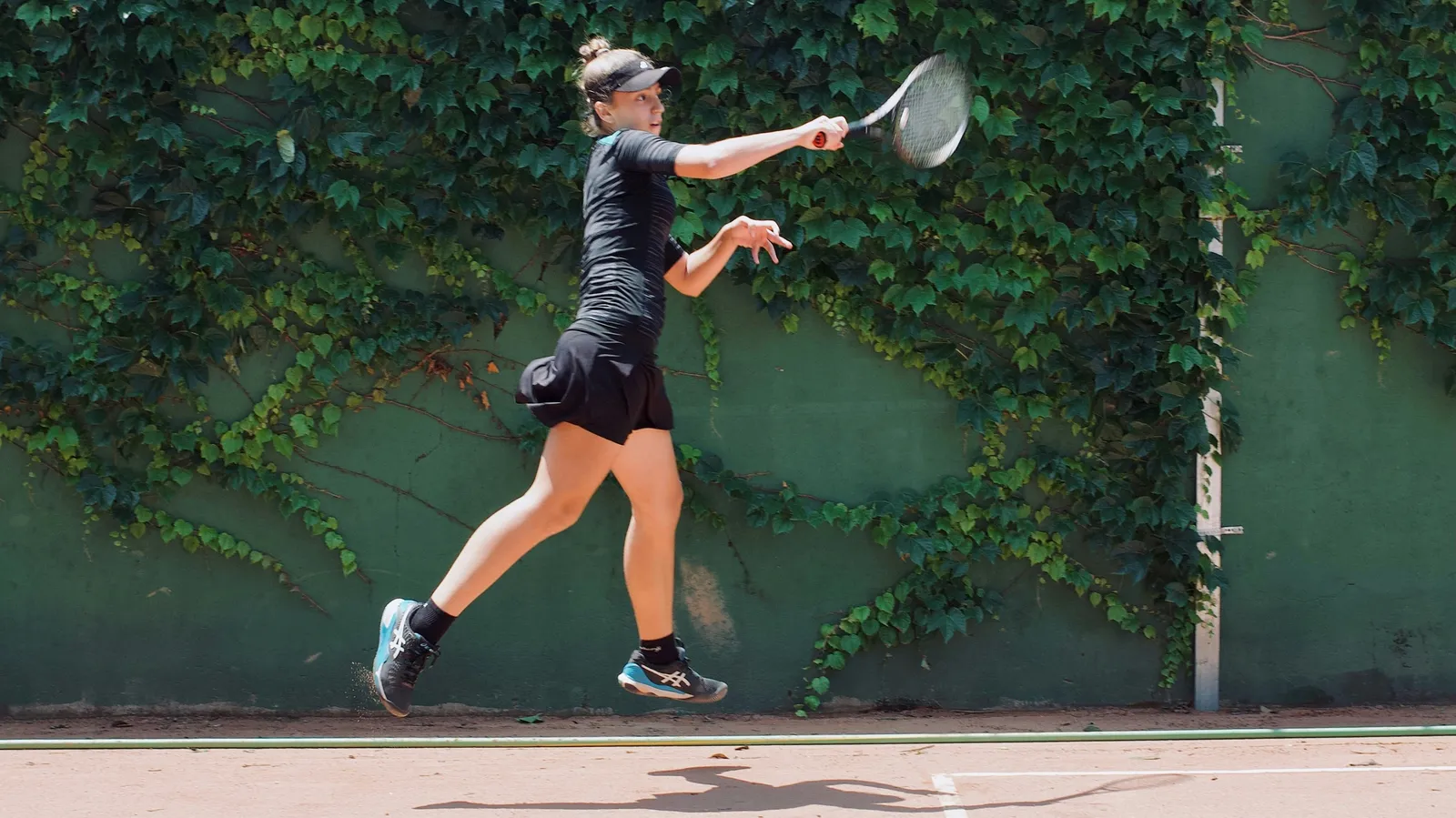
Tennis rewards patience more than talent in the first year. The strokes take time, the scoring is strange, and the ball rarely goes where you meant it to. The good news is that a handful of basics, half physical and half mental, make the learning curve far kinder. Here is a practical list to come back to.
Physical tips
Most beginner problems start before the racket touches the ball. Get the body into the right place and the stroke has a chance.
1. Move your feet first
Footwork is the quiet skill behind every good shot. Stay on the balls of your feet between shots, and do a small split step, a little hop that lands as your opponent hits, so you can push off in either direction.
Then take several small adjustment steps instead of one big lunge. The goal is to arrive early and hit the ball at a comfortable distance from your body, not to reach for it at full stretch. If a shot feels rushed, the fix is often in your feet rather than your arm.
Recover after every shot, too. Once you have hit, move back towards the middle of the court instead of standing still to admire the ball. It is a small habit that wins you a surprising number of points.
2. Learn the right grips early
Grip decides what the racket face does at contact. Many coaches teach an eastern or semi-western grip for the forehand and a continental grip for the serve and volleys. Ask a coach to check yours in the first few lessons, because a grip habit is much harder to change once it is set.
Hold the racket firmly enough to control it but loosely enough that your forearm is not tense. A death grip tires your arm and kills feel.
3. Warm up properly
Five to ten minutes of light movement before you hit makes a real difference: a gentle jog or skipping, arm circles, leg swings, side shuffles and a few lunges. Save long, static stretches for after play.
On court, start with short, easy rallies from the service line before moving back to the baseline. It warms up your timing as well as your body, and it is a calm way to settle in.
4. Recover between sessions
Tennis is stop-start and asks a lot of your legs, shoulder and forearm. Drink water before and during play, stretch gently afterwards, and give your body a day off when it is sore rather than pushing through.
Sleep and rest are where you actually get fitter. If something hurts in a sharp or lasting way, especially the elbow or shoulder, stop and get it checked rather than playing on.
Mental tips
The mental side is just as learnable, and it decides how much you enjoy the game while the technique catches up.
5. Be patient with progress
Improvement in tennis is not a straight line. You will have a session where everything clicks and then one where nothing does. That is normal. Look at progress over weeks, not over a single afternoon.
Pick one thing to work on at a time: a higher contact point on the forehand, a consistent toss, a split step. Trying to fix five things at once usually fixes none.
A few lessons early on are worth the money. A coach can spot a grip or footwork habit in minutes that might take you months to notice on your own, and group sessions are an easy way to meet people at your level to play with between lessons.
6. Handle mistakes without spiralling
Everyone misses, including professionals. What matters is how quickly you let a mistake go. A simple routine helps: turn away from the net, take a breath, adjust your strings, and decide what you will do on the next point.
Notice the difference between a useful thought (“I was late, move earlier”) and an unhelpful one (“I’m terrible at this”). Keep the first, drop the second.
Tennis is a mental game, journaling is how you train it
7. Choose a mindset that keeps you playing
Focus on effort and the things you control: preparing early, watching the ball, committing to your shot. Results follow, but they are not the only measure of a good day.
Play with people slightly better than you when you can, and thank them. Celebrate the small wins: a rally that lasted ten shots, a first serve that went in under pressure. Those moments are the real progress, and they make you want to come back.
Enjoy every time you play, and don’t overthink it
Write it down after you play
The fastest way to learn from each session is to spend a minute on it afterwards: what you worked on, how you felt, and one thing to try next time. Over a few weeks those notes show you patterns you would never spot from memory, like which warm-up helps, or how often nerves crept in on the serve.
That is what tete is built for: a quick, private tennis journal on your phone where you log the session, your mood and what worked, and watch your progress build over a season.