Tennis is a mental game, journaling is how you train it
Play another sport and you feel the difference immediately. In a team sport you can have a quiet quarter, pass the ball, let a teammate carry the load, and the points you scored earlier still count. Tennis is not like that. Every point is on you: this serve is yours, and if you miss it, the next one is yours too. There is no one to pass to. That relentless, solitary pressure is why tennis is such a mental game, and why the mind is the part most worth training.
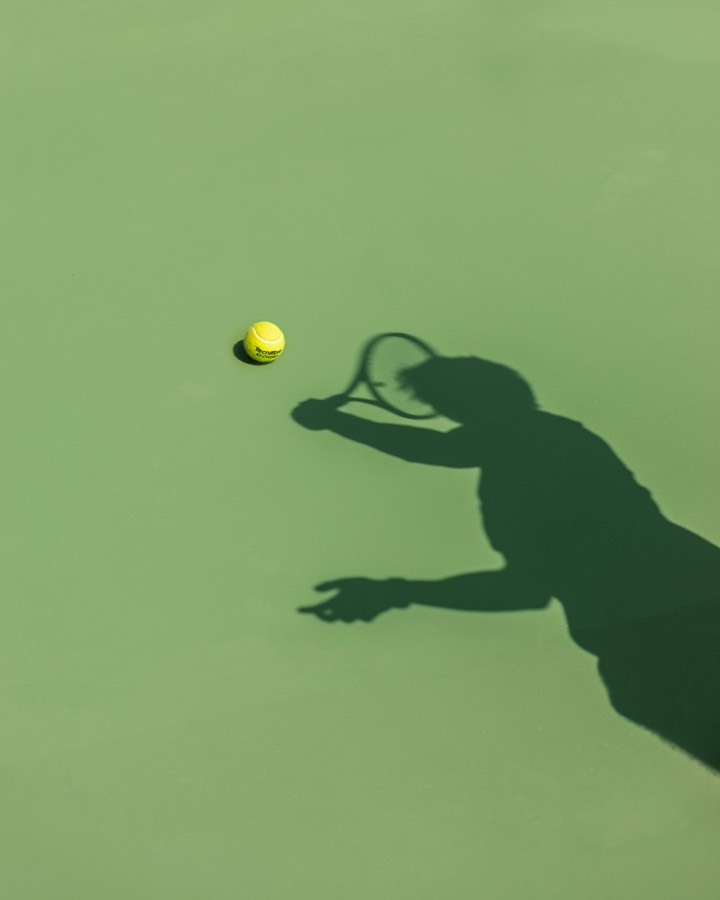
Sometimes the enemy is yourself
The player across the net is only half of it. The other half is the one holding your racket. Some days you wake up loose and clear and the ball looks like a beach ball; other days the same forehand you own suddenly will not land, and the frustration feeds on itself until you are playing your worst tennis against your best self. The opponent did not change. You did.
Learning to handle that is the whole game. It starts with noticing it, which is where reflection comes in. When you write down a good day, you are collecting evidence of what “good” felt like: how you warmed up, what you told yourself, how you breathed at 30–40. When you write down a bad day, you stop pretending it did not happen and start asking why. Was it sleep, nerves, a grudge from the last point, trying to hit winners you had no business trying? Your thoughts and reflections, written down, are how you meet the version of you that shows up next time.
Why the scoreboard makes it harder
Tennis scoring is almost designed to test your head. A lead evaporates between sets: fight to 5–7 in the first and you walk to the second with nothing to show for it. Games swing on a knife edge. To win from deuce you have to string two points together, again and again, while your opponent only needs to break the run once. Momentum is real, and it is fragile. The player who stays level through those swings usually beats the player with the bigger forehand.
What a journal does for the mental side
You cannot manage what you cannot see. Right after a match you have a vivid but fleeting read on your own head, and it fades within the hour. A few lines written down turn those fleeting impressions into a record you can learn from:
- What settled you. A routine between points, a breath, a swing thought. Note it when it works so you can reach for it on purpose next time.
- What tilted you. A bad call, a let cord, a lead you gave back. Naming the trigger is the first step to not being owned by it.
- What you would do differently. Not technically, mentally: “slow down before serving at 30–40,” “stop replaying the last point.”
Do this for a few weeks and patterns surface that no single match reveals: you tighten up serving for the set, you fold after losing a long rally, you play your best when you are a little behind. Those are coachable, but only once they are on the page.
Frustration fades; the entry stays
The catch with the mental game is timing. The motivation to fix it is loudest right after a painful loss and gone by the next practice. Writing it down while it stings is how you make the lesson outlast the feeling, and how, a season later, you can read back and see not just how you played, but who you were learning to be on court.
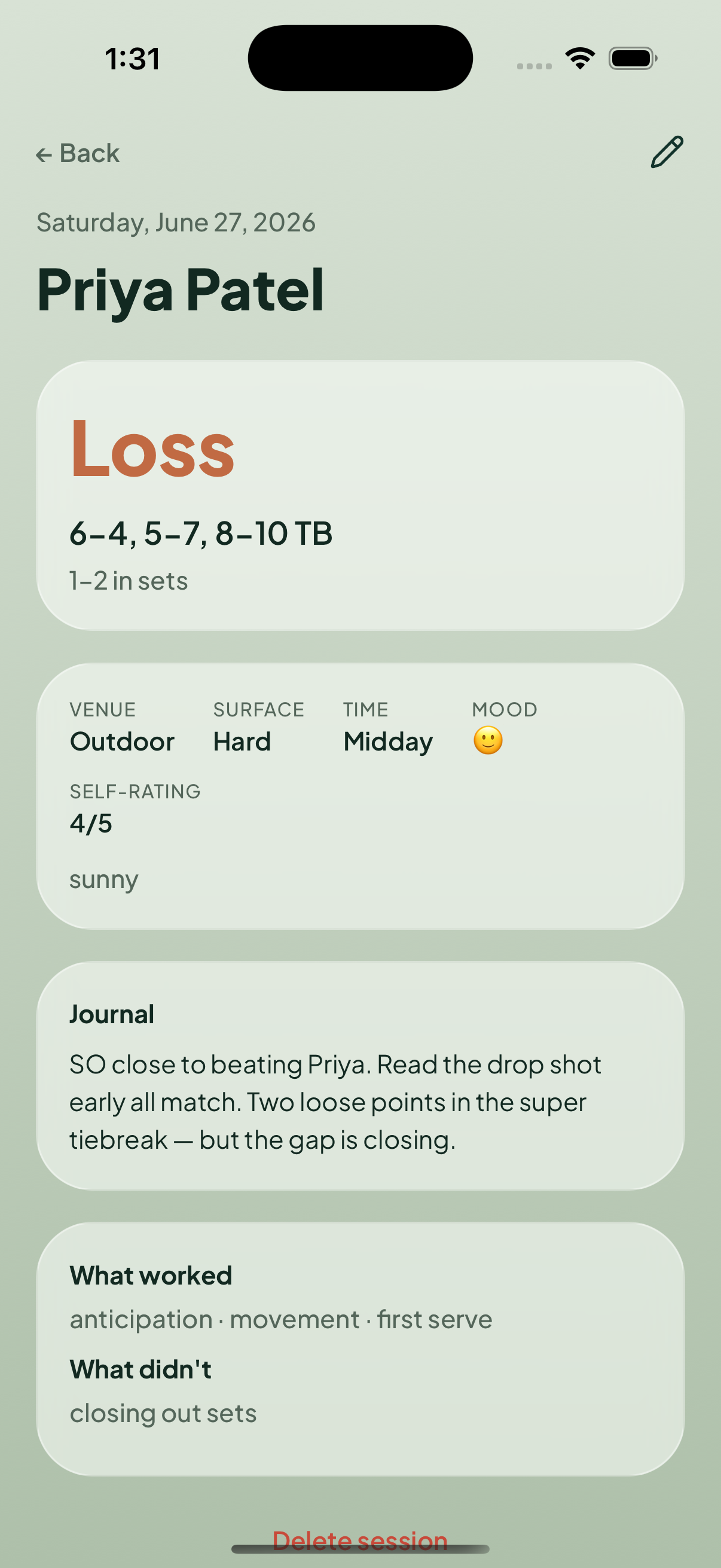
Keep the mental notes with everything else
Mood and mindset are a first-class part of a good tennis journal, not an afterthought. In tete's match notes you can log how a session felt alongside the score and conditions, so the mental thread runs right next to the results, and you can watch both improve together.