What is a tennis journal, and why keep one?
A tennis journal is a private record of your tennis: the matches and practices you play, who you played, the score, the conditions, and how the whole thing felt. Think of it as a tennis diary that is part scorebook, part scouting notebook, part memory. Kept even loosely, it turns a blur of weekly hits into a season you can actually look back on and learn from.

Most players rely on memory, and memory is a poor scorekeeper. You beat someone in three sets in April; by the July rematch you have forgotten they live on their backhand slice and crumble under pace. You had a breakthrough on your serve one evening and never wrote down what changed. A journal fixes that quietly, one entry at a time.
What to put in a tennis journal
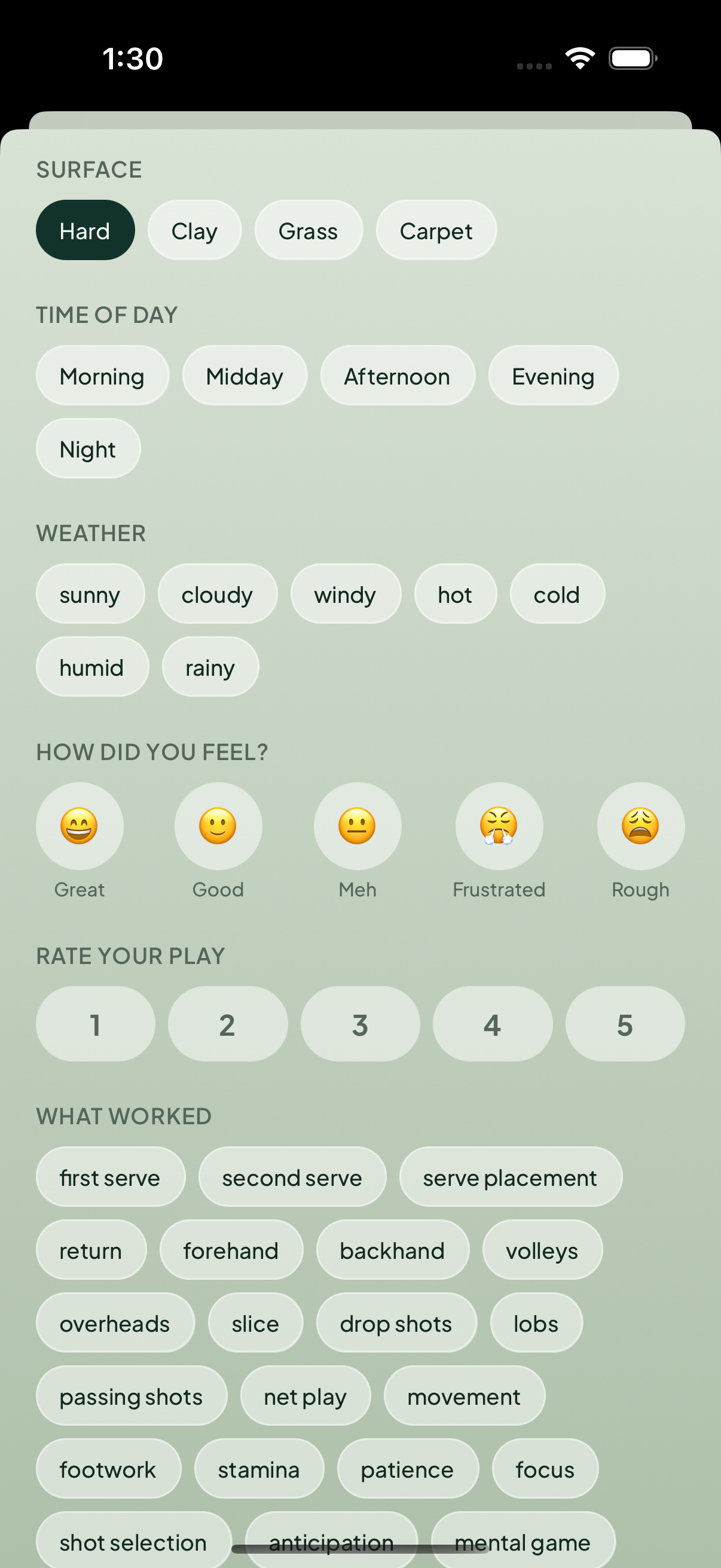
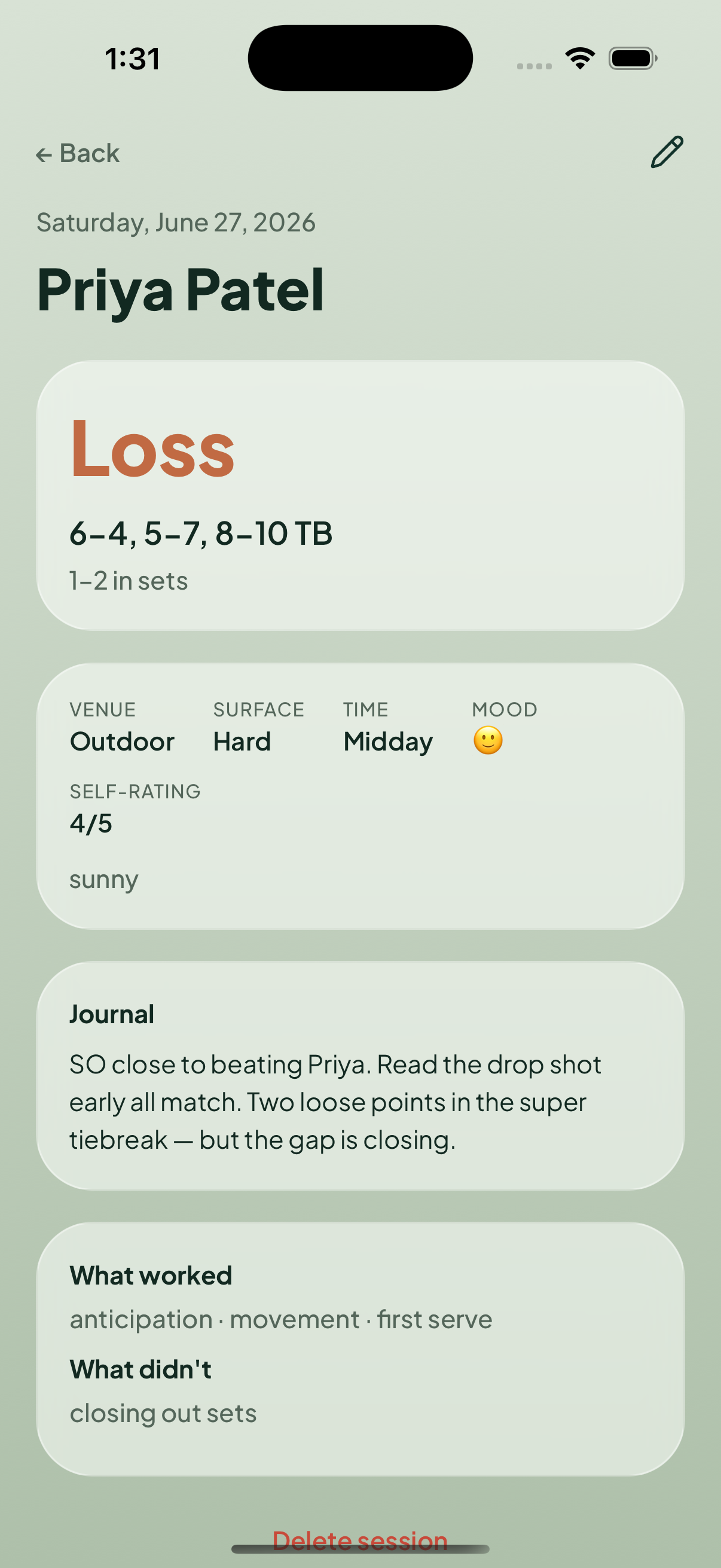
The useful stuff is simple, and most of it takes seconds to jot down after you shake hands:
- The result and score. Match or practice, singles or doubles, set by set.
- The conditions. Surface, venue, indoor or outdoor, wind, heat. Context that explains a lot of results.
- Your opponent. Their playing style, patterns, and a game plan for next time. (More on that in remembering opponents.)
- How it felt. Your mood, nerves, what settled you, what tilted you. Tennis is a mental game, and this is the part memory loses first.
- One thing that worked, or didn't. The single takeaway you want to carry into the next session.
- A photo. The court, the scoreboard, the people. It anchors the memory better than any stat.
Not sure what to write? We made a short checklist: what to write in your tennis notes after a match.
Why keep one
You remember more. If you play once or twice a week with different partners, the details evaporate: what you talked about, how someone plays, how a match felt. A journal gives you something real to look back on months later instead of a vague sense that the season happened to someone else.
You actually improve. Frustration after a loss is loud but short-lived, and the motivation to fix things rarely outlasts the week. Writing down the lesson while it stings means it is still there when you next step on court, long after the feeling faded.
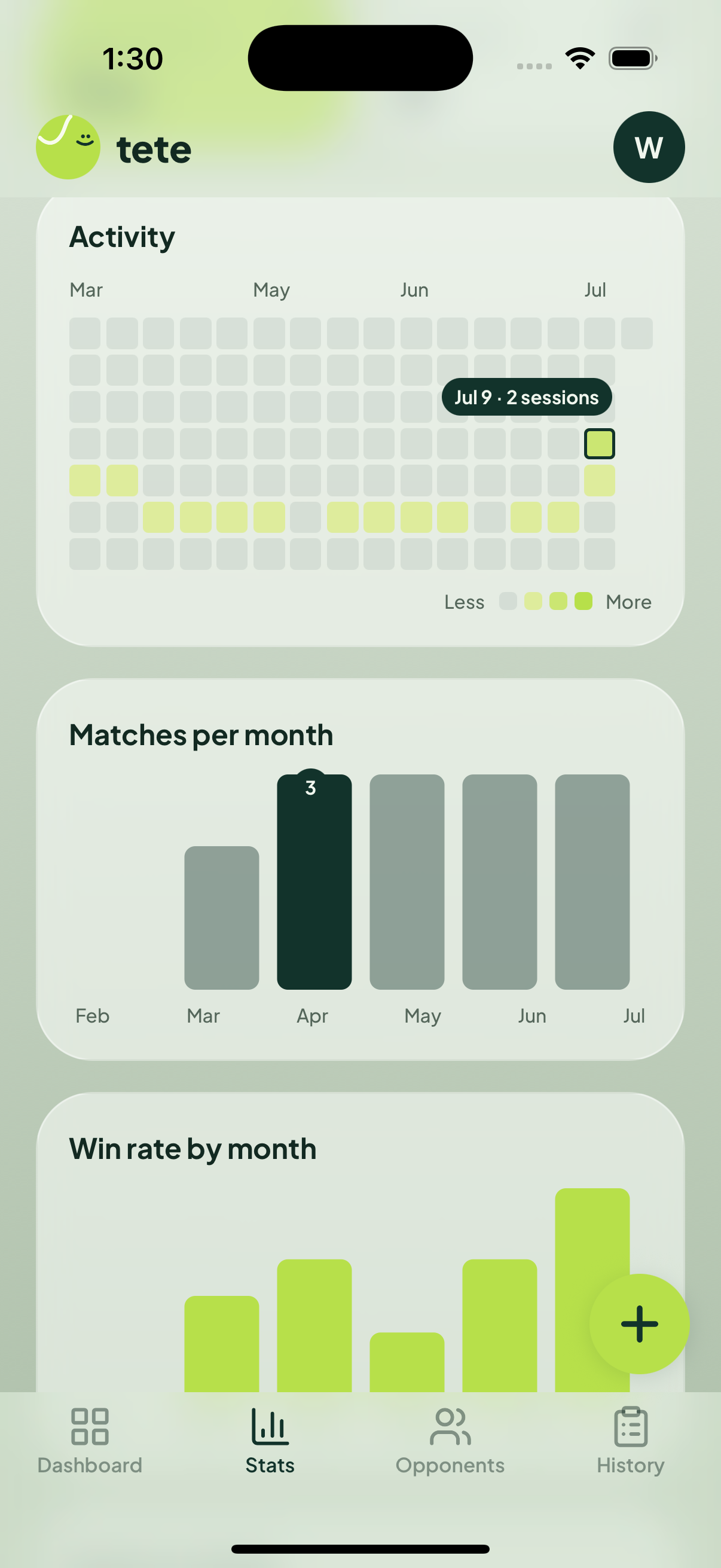
You can see the trend. One match tells you nothing. Fifty matches, logged, reveal a win-rate curve, your best and worst surfaces, streaks, and the shape of your season. Progress you can feel becomes progress you can see.
It becomes a memory. Years from now the stats will matter less than the entry that says “FINALLY beat Marco.” A journal keeps the story, not just the scoreline.
Paper, notes app, or a tennis journal app?
A paper notebook works and never runs out of battery, but it cannot add up your win rate or find that opponent from six months ago. A generic notes app is always with you but gives you no structure, so entries drift and stats are impossible. A dedicated tennis journal app gives you fast, structured entry and does the math for you: the same minute of effort, now compounding into charts, head-to-head records, and a searchable history.
How to start, step by step
You do not need a system. You need a habit small enough to keep. Here is the whole thing:
- Log your next session, today. Match or practice, it does not matter. Score, surface, and one line on how it felt is plenty to begin.
- Do it before you leave the court. Thirty seconds while you pack up beats a perfect entry you never write on the drive home.
- Tag the person you played. One profile per opponent, built up over time, becomes your scouting notebook.
- Add a mood and a photo. These are what make you reopen an entry a season later, and what feed the mental side of your game.
- Let it add up. After a few weeks you stop writing for the record and start reading it for the trend.
Start one on your phone
That is exactly what we built tete for: a private tennis journal for your phone. Log a match or practice in under a minute, with scores, surface, mood, opponent, and photos, and it turns into a dashboard, an activity heatmap, win rates by surface, and an opponent profile for every rival. No feed, no followers; every record is private to you. It turns the checklist above into something you will actually keep.