How to remember every opponent's playing style
Here is a scenario every club player knows. You join a club, you play once or twice a week, and it is a different person across the net each time. You have a great match with someone, chat for twenty minutes afterward, and by the time you draw them again two months later you cannot remember whether they had a one-handed backhand, let alone what you talked about. Memory is not built for this. Opponent notes are.
Why it is worth the effort
Tennis rewards preparation more than almost any recreational sport, because so much of it is patterns. If you know before the warm-up that someone slices every backhand, folds under pace, and double-faults when pushed, you walk on court with a plan instead of spending the first set rediscovering what you already learned last time. Opponent notes turn every rematch into a second chance you are actually ready for.
Reading a player fast is a skill
Think about the five-minute warm-up. A strong player is already scouting: this person's backhand is a push, the second serve sits up, they scramble but hate coming forward. Reading an opponent that quickly, on almost no information, is one of the real skills of the game, and it is genuinely hard. Most of us miss half of it in the moment and only realize an hour later what we should have attacked.
You build that instinct the slow way: by paying attention after matches, when there is time to think. Write down what a player actually did once you have seen a full match, and the next warm-up you notice the same patterns faster, because you know what to look for. The after-match note trains the in-the-moment read. Starting your match notes in tete is the cheapest way to begin.
What to note about an opponent
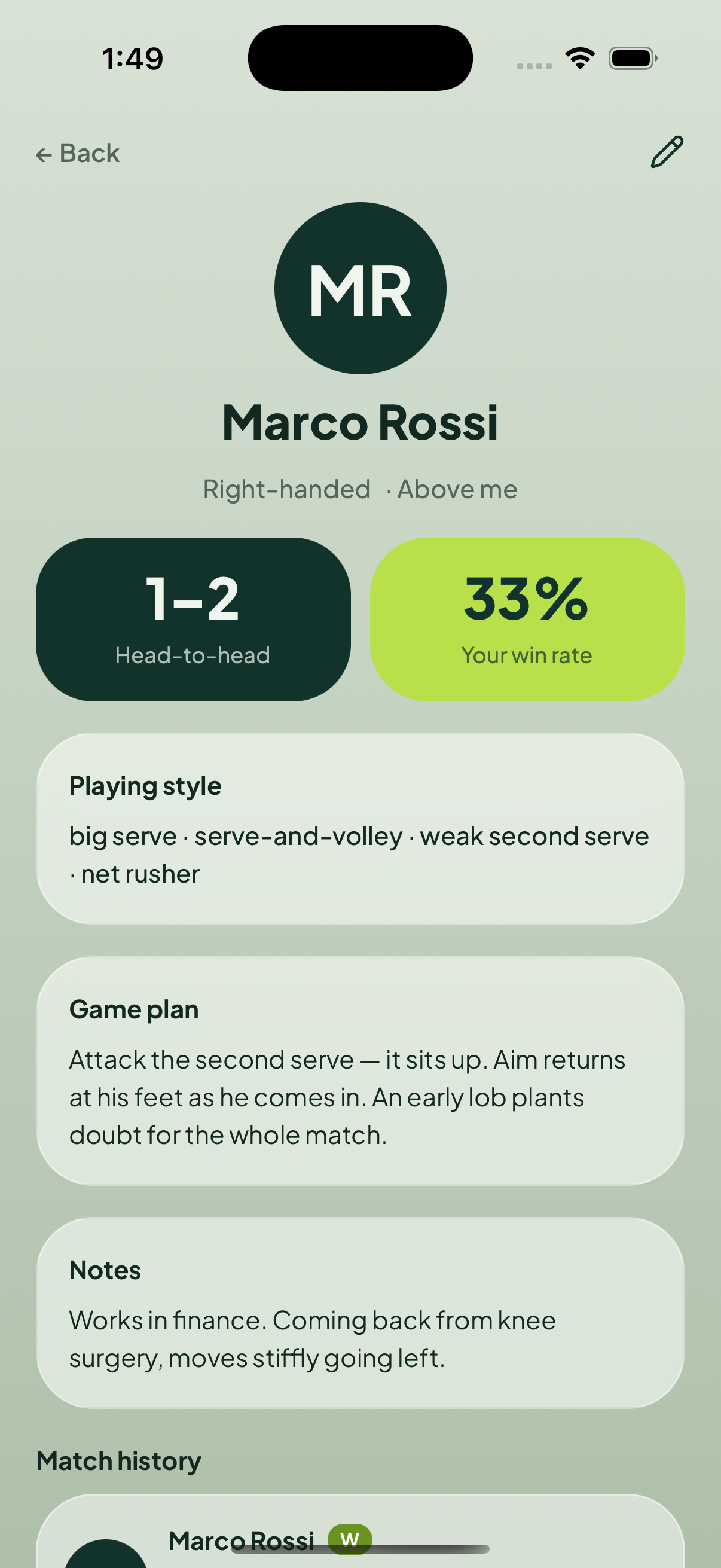
- Playing style, in tags. Baseliner, serve-and-volleyer, counterpuncher, lefty, one-handed backhand, big forehand, weak second serve. A handful of tags recalls the whole picture faster than a paragraph.
- Patterns and tendencies. Where they go on big points, what they do under pressure, which wing breaks down when you push it.
- A game plan. One or two lines you write for next time: “attack the backhand, come in behind it, make them pass.”
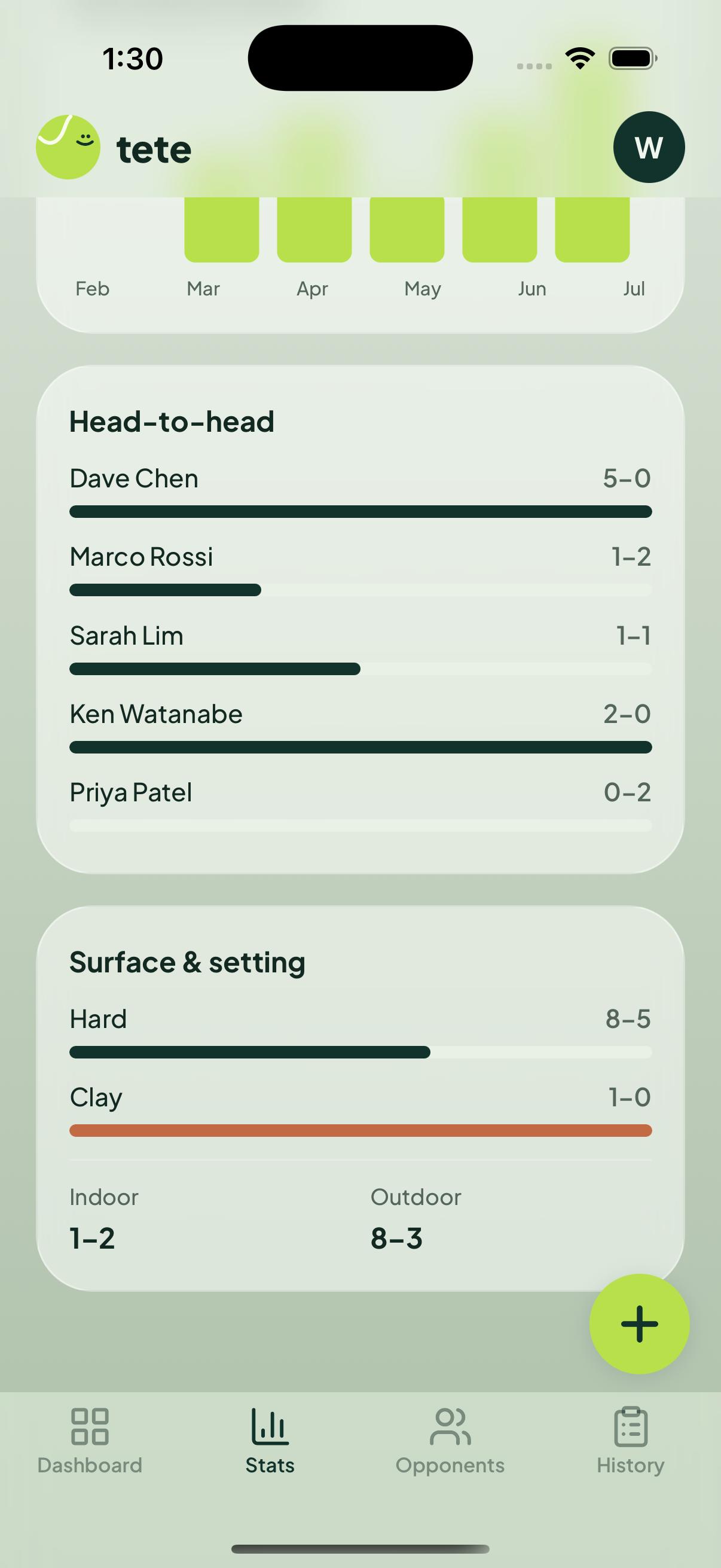
- The head-to-head. Every result against them, so you know the story before you shake hands.
- The human bit. A note about who they are, the conversation, the running joke, so the club feels like a club, not a queue of strangers.
Keep it where you will actually find it
Notes scattered across a phone's notes app never resurface at the right moment. The system only works if each opponent has one profile that pulls up instantly by name. That is the idea behind opponents in tete: a profile for every rival with playing-style tags, the game plan you wrote last time, and the head-to-head record, all ready before the rematch handshake, however many months it has been.
It pairs naturally with the rest of your match notes. Log the session, tag the opponent once, and the next time their name comes up in the draw, everything you learned is right there.