Top 4 tennis rackets for beginners, and who each one suits
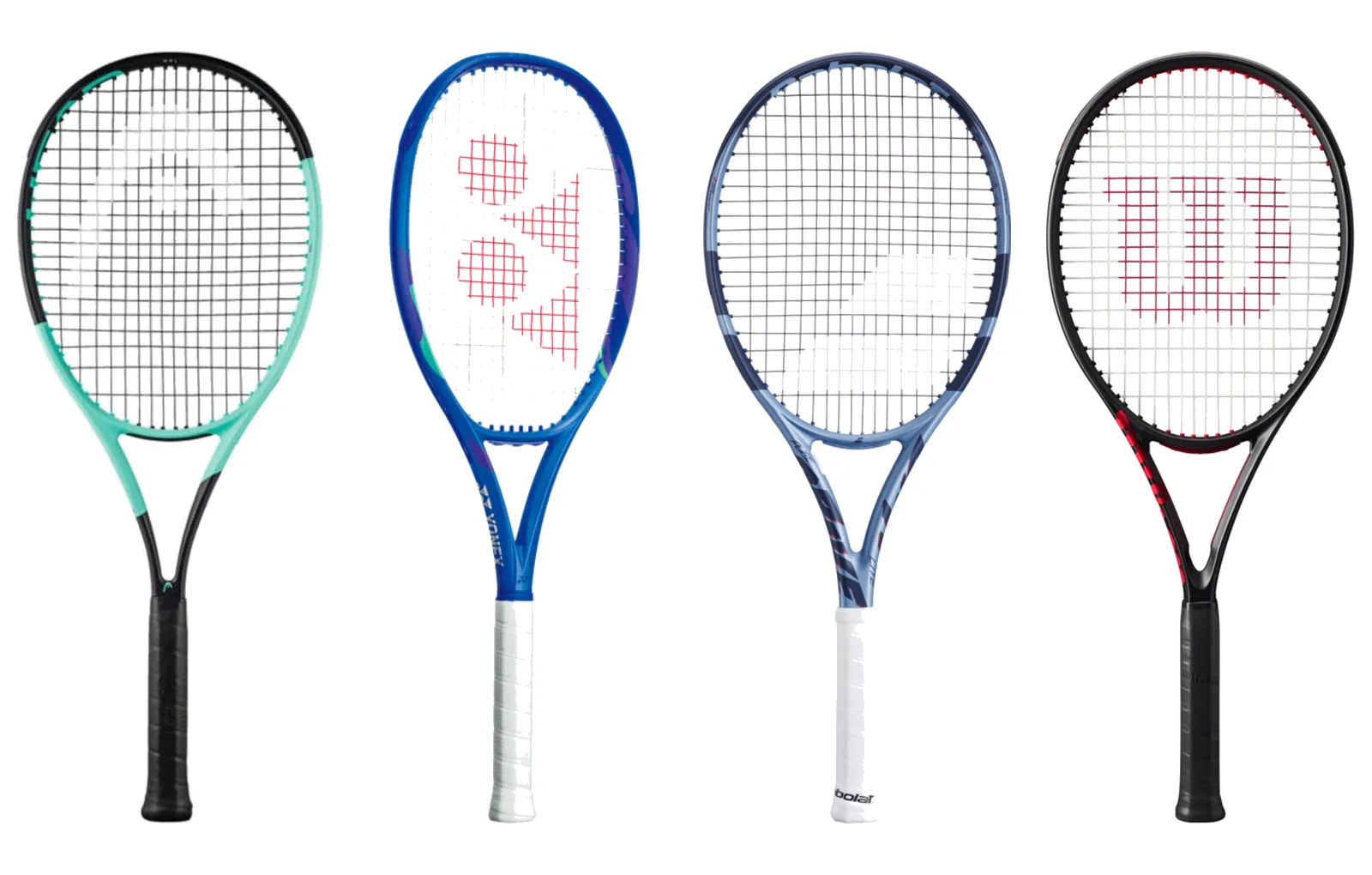
Walk into a tennis shop as a beginner and the wall of rackets can feel like a test. It isn’t. Most adults learning the game do well with a 100 square inch head, a weight of around 300 grams unstrung and a 16x19 string pattern. Four frames come up again and again in that space: the Head Boom MP, the Yonex EZONE 100, the Babolat Pure Drive and the Wilson Clash 100. This is not a ranking and nobody paid for a mention. It is a plain look at what each racket is and who it tends to suit.
Before you choose: what the numbers mean
- Head size: a bigger head gives a larger sweet spot and more forgiveness on off-centre hits. 100 square inches is the common middle ground; all four rackets here use it.
- Weight: lighter frames are easier to swing and manoeuvre, heavier ones feel more stable against pace. Around 295–300 grams unstrung suits many adults; younger, smaller or less active players may prefer a lighter version.
- String pattern: 16x19 means 16 main strings and 19 cross strings. This fairly open pattern helps the ball grip the strings for spin and gives easy depth.
- Stiffness (RA): a lower number means a more flexible, softer-feeling frame; a higher one feels crisper and returns more power. If your arm or elbow is sensitive, lower is usually kinder.
Specs below are for the current standard models as listed by the brand or major retailers. Published stiffness can vary between sources and samples, so where the figures disagree we have left the number out rather than guess.
The four rackets at a glance
On paper they look almost identical, which is exactly why feel matters more than the spec sheet. The differences show up in flex, balance and how much free power each frame gives you.
| Racket | Head size | Weight | String pattern | Stiffness (RA) |
|---|---|---|---|---|
| Head Boom MP (2026) | 100 sq in | 295 g | 16x19 | Not listed |
| Yonex EZONE 100 (2025) | 100 sq in | 300 g | 16x19 | 68 |
| Babolat Pure Drive (2025) | 100 sq in | 300 g | 16x19 | Sources vary |
| Wilson Clash 100 v3 | 100 sq in | 295 g | 16x19 | 54 |
1. Head Boom MP: easy speed and spin
The Boom MP is the lightest of the four at 295 grams unstrung, with a head-light balance that makes it quick to swing and easy to move at the net. The 2026 version keeps the same core specs as the previous one and adds a new boron-fibre material in the shaft, which reviewers say improves feel, plus a reworked string spacing aimed at spin.
Who it suits: a beginner or improving player who wants a racket that feels lively and fast through the air, and likes to brush up on the ball for topspin. It is a comfortable, all-round choice that will not punish you for late swings. Head also makes lighter Boom versions (the MP L and MP UL) if 295 grams feels like a lot.
2. Yonex EZONE 100: forgiving and comfortable
The 2025 EZONE 100 is the eighth generation of the line. Yonex thickened the beam at the top of the hoop for stability and power, and reviewers describe the result as easy to use and forgiving on off-centre hits. At 300 grams unstrung with a stiffness of around 68, it offers solid, easy depth without feeling harsh for most players.
Who it suits: someone who wants a predictable, forgiving racket that gives a little free power and still feels connected. It works well for beginners who are developing fuller swings, and it is a frame you can keep as your strokes improve. The EZONE 100L is a lighter option in the same family.
3. Babolat Pure Drive: free power from the baseline
The Pure Drive is one of the best-known power rackets in tennis, and the 2025 model is its eleventh generation. It shares the 100 square inch, 300 gram, 16x19 formula, but it has a crisper, firmer feel than the others here. Babolat softened the 2025 version for comfort; published stiffness figures still vary from source to source, which is why we have not quoted one.
Who it suits: a beginner with a compact swing who wants the ball to fly deep without much effort, or a player who already likes a firm, responsive feel. If you are prone to arm discomfort, try it before you buy, or look at the lighter Pure Drive Lite and Team versions.
4. Wilson Clash 100: the soft, arm-friendly option
The Clash is built around flexibility. The Clash 100 v3 has a stiffness rating of 54, far lower than most rackets in this class, at 295 grams unstrung with a head-light balance. The frame bends more on contact, which gives a soft, plush feel and helps the ball stay on the strings a touch longer.
Who it suits: a beginner who values comfort above everything, anyone with a sensitive elbow or shoulder, or a player who wants control and feel rather than raw power. Because it gives less free pace than the Pure Drive, you will supply more of the swing yourself. The Clash 100L v3 is a lighter version.
How to choose between them
- Demo before you buy. Many clubs and shops let you hit with a demo racket; a single session tells you more than any table.
- Pick the grip size that fits your hand. If you are between sizes, the smaller one is easier to build up with an overgrip.
- Start with comfortable strings. A soft synthetic gut or multifilament at a moderate tension is a forgiving start for most beginners.
- Do not overbuy. Any of these four is enough racket for years of learning; your technique will matter more than the logo.
If you are torn, think about what you want more of. Light and quick: the Boom. Forgiving and balanced: the EZONE. Free power: the Pure Drive. Comfort and feel: the Clash.
When should you restring your tennis racket?
Beginner tennis tips: the physical and mental basics
Keep track of your racket and strings
Once you have a racket, the next question is when it needs new strings, and that is surprisingly easy to forget. In tete you can add your rackets, set a main one, and record each string change with the string, tension and date. Choose the racket when you log a session, and tete shows how many sessions and recorded hours you have played since your last restring, so you can notice when the feel starts to fade.
It also makes demo days more useful: log a session with each racket you try and write a line on how it felt. A week later, you will remember which one actually suited you.