When should you restring your tennis racket? Timing, feel and materials
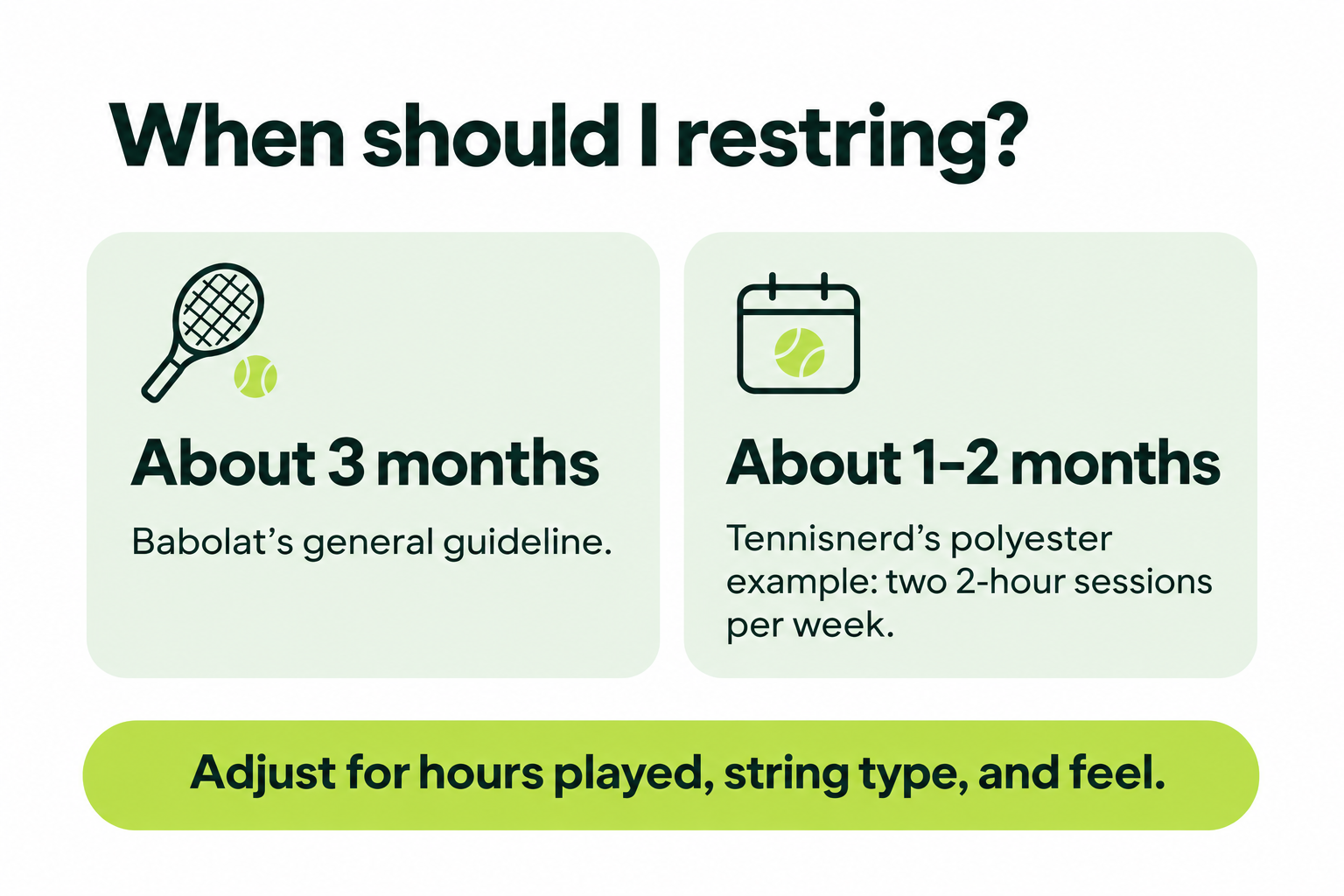
How often should you restring? If you play regularly, start with about three months, then adjust for string type, hours played and feel. Unbroken strings can still be past their best.
How often? Start with a guideline, then check the strings
Babolat’s general advice is to restring “once every three months”. This is a performance guideline, not a guarantee that every string will last three months. More hours and harder hitting call for closer attention.
Do not wait for polyester to break. For someone playing twice a week for two hours each time, Tennisnerd suggests restringing about every one to two months. This is the author’s practical recommendation, not a deadline for everyone.
What makes the four common string types different?
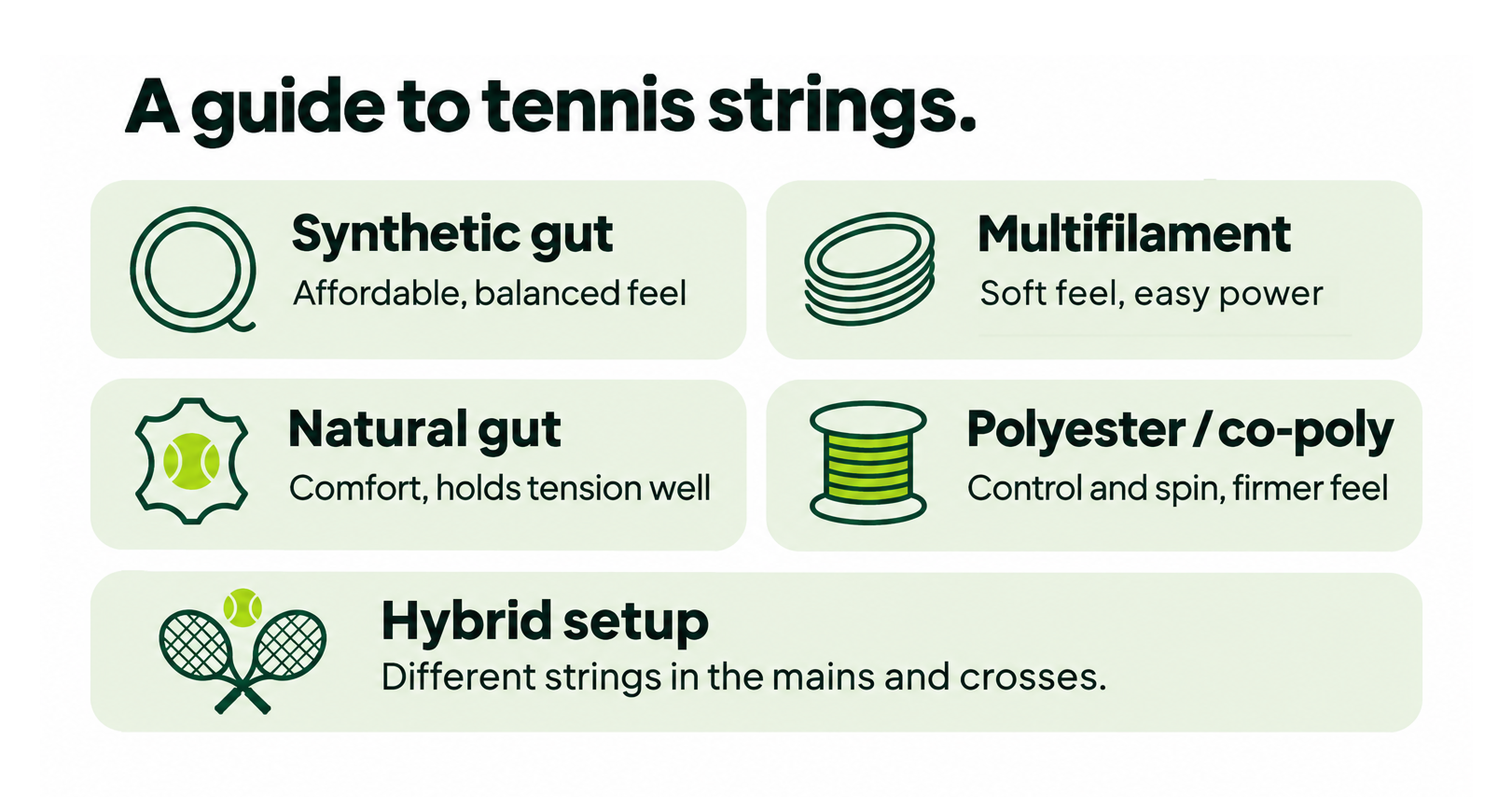
Start with the feel you want, then choose a material. These are general characteristics; model, gauge and tension also make a difference.
- Synthetic gut: usually made from nylon, affordable and balanced. A good starting point for beginners or anyone finding their preferred feel.
- Multifilament: made from many fine fibers, with a soft feel and easy power. It may wear faster for hard hitters.
- Natural gut: elastic, comfortable and good at holding tension, but more expensive. Good tension maintenance does not prevent wear.
- Polyester / co-poly: emphasizes control and spin and resists breaking, but is generally firmer and loses tension faster. Better suited to fast swings; durability alone is not a reason to choose it.
- Hybrid: a setup, not a separate material. Mains and crosses use different strings, such as natural gut with polyester. Check both directions for wear.
What changes when you hit?
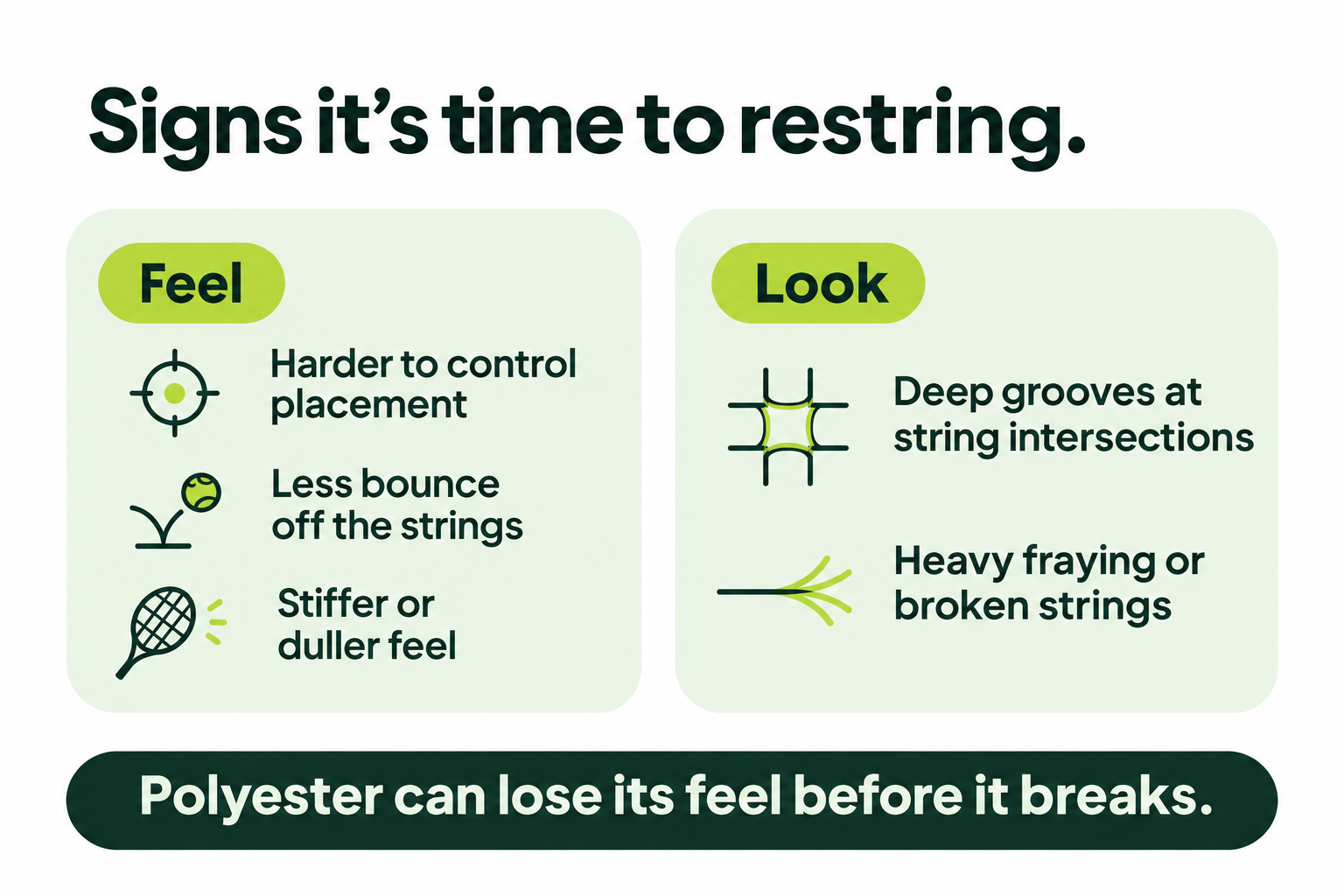
Notice whether your usual swing consistently produces less predictable placement, less spring from the strings, or a stiffer, duller feel. Polyester can lose its original elasticity and response while still looking intact.
Compare several sessions in similar conditions before blaming the strings for one bad day. If the change persists, ask a stringer to check your racket rather than waiting for your planned restring date.
Can you tell by looking?
You can spot wear, but appearance does not tell the whole story. Look for deep grooves where strings cross, obvious fraying, loose fibers or broken strings. Tennis-Point lists fraying and deep notches as signs to restring.
A little fraying cannot tell you how many sessions remain, and an intact string does not prove its tension and elasticity are unchanged. Consider appearance, feel and playing time together.
Record three things for next time
The restring date, string model and requested tension. For a hybrid, record mains and crosses separately, and include the unit: lb or kg.
Add a short note about the fresh strings, such as “easy depth, consistent placement”. That gives you a baseline if control changes later. Tracking playing hours also helps you find your own restringing rhythm.
When unsure, ask a stringer
Tell your stringer how often you play, how long each session lasts and what feels different. This helps them advise when to restring and what to try next.
References
Sources reviewed on 18 November 2026. This guide summarizes advice from a brand, equipment retailers and a gear reviewer; adjust restringing intervals to your own use.
Babolat: restringing intervals
Tennisnerd: when to restring polyester